
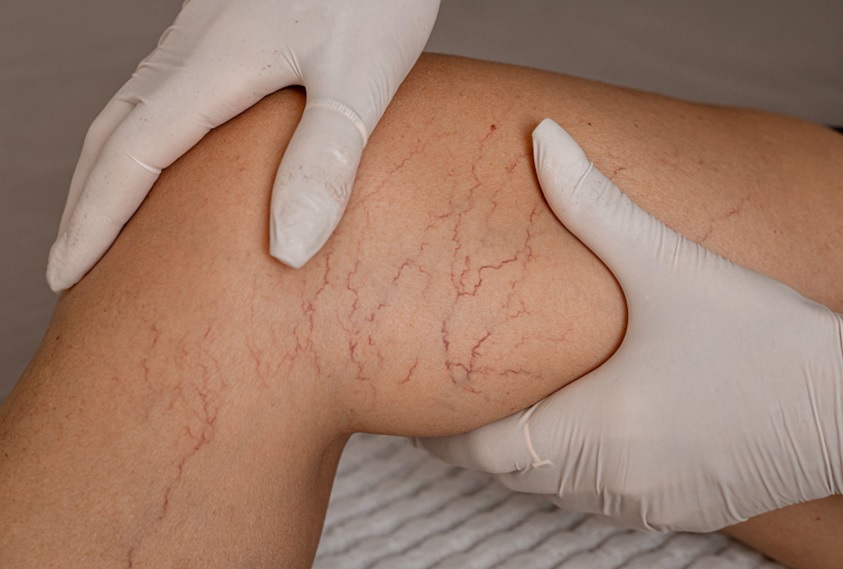

Spotting web-like clusters of red, blue, or purple lines across your legs often catches you off guard. One morning you notice a faint starburst near your ankle, and a few months later, branching networks spread across your outer thighs and calves. While these visible capillaries rarely trigger severe physical pain, they frequently prompt people to cover up in warmer weather.
Understanding why these markings favour your lower limbs starts with gravity and human anatomy. When surface blood vessels lose their structural elasticity, blood pools just beneath the epidermis. Many individuals seeking care explore spider vein treatment in Singapore to address visible skin markings and check for deeper circulatory issues. Learning all about spider veins in Singapore helps you take steps to manage your vascular health.
Battling Gravity: The Uphill Climb of Lower-Limb Circulation
Your heart pumps oxygen-rich blood downward to your toes, yet returning that blood upward requires sustained mechanical effort. Leg veins work against gravity across the longest vertical distance in your entire body.
To prevent blood from flowing backwards between heartbeats, your leg veins rely on one-way flap valves and calf muscle contractions. When you walk, your calf muscles squeeze deep veins like a pump, pushing blood upward toward your chest. However, when valve leaflets weaken or stretch, small amounts of blood slip backwards. This backflow increases localised pressure inside superficial venules, causing them to dilate, twist, and appear visibly through the skin of your thighs and calves.
Modern Desk Jobs and Stationary Standing Routines
Daily lifestyle habits influence how efficiently your calf muscle pump functions. Prolonged periods of sitting at an office desk or standing behind a retail counter slow down venous return.
Examine how everyday immobility affects your lower-limb vessels:
- Reduced calf pumping – Sitting for hours leaves your lower leg muscles inactive, allowing blood to pool in your calves and ankles.
- Knee and hip flexion – Crossing your legs or sitting in tight-angled chairs compresses pelvic and popliteal veins, creating downstream backpressure.
- Sustained hydrostatic pressure – Standing motionless on hard floors forces lower-leg capillaries to bear continuous vertical fluid weight without muscular relief.
- Heat-induced dilation – Warm tropical climates widen superficial blood vessels, making existing capillary networks appear darker and more visible.
Hormonal Shifts, Genetics, and Structural Susceptibility
Sometimes, spider veins appear even when you maintain a regular fitness routine. Inherited traits and natural hormonal fluctuations play a role in vein wall resilience.
If your parents or grandparents developed visible leg veins, you likely inherited weaker connective tissue or venous valves. Furthermore, female hormones—particularly oestrogen and progesterone—relax smooth muscle fibres inside blood vessel walls. Pregnancy, oral contraceptives, and hormone replacement therapies raise these hormone levels while increasing total blood volume. Combined with the physical pressure of a growing uterus on pelvic veins, these shifts explain why women frequently notice clusters appearing across their thighs during and after pregnancy.
Skin Thickness and Sun Exposure Across the Legs
The physical characteristics of the skin covering your thighs and calves also make underlying vessels easier to see. Skin across the outer thighs, behind the knees, and along the shins sits relatively thin with minimal subcutaneous padding compared to other areas of the body.
Additionally, cumulative ultraviolet radiation from years of outdoor sun exposure breaks down collagen and elastin fibres within the dermis. As the surrounding skin loses firmness and density, superficial capillaries lose their supportive cushion, allowing faint red and purple webs to show through the surface. Seeking an evaluation for persistent spider veins in Singapore clarifies whether these surface markings stem from capillary dilation or signal underlying venous insufficiency.
Managing Skin Appearance and Leg Circulation
Spider veins around your thighs and calves develop through a combination of gravity, daily posture, genetics, and hormonal dynamics. While regular walking, leg elevation, and compression stockings support blood flow, spider vein treatment in Singapore, such as microsclerotherapy and vascular laser therapy, seals off affected surface vessels so your body absorbs them naturally.
Frequently Asked Questions
Are spider veins on the thighs and calves a sign of serious health danger?
In most cases, isolated spider veins pose a cosmetic concern rather than a medical emergency, though an ultrasound scan helps verify whether deeper saphenous veins remain functional.
Can exercise make existing spider veins disappear completely?
Regular aerobic movement strengthens your calf pump and helps prevent new clusters from forming, yet physical exercise cannot shrink blood vessels that have already dilated.
How quickly do legs clear up after spider vein procedures?
Treated capillaries fade progressively over 3 to 6 weeks as your body absorbs the closed vessels.
Contact UNITAS Vein & Endovascular Clinic to schedule a consultation today and evaluate your circulation and discuss vascular care options for your legs.

Comments are closed.